By Kimball Cariou
Even within the federal Liberal caucus, fears are being voiced that the so-called "Anti-Terrorism" Bill C-36 is a grave danger to civil liberties. By late October, the pressure was growing on Justice Minister Anne McLellan to amend C-36.
Introduced into the House of Commons on October 15, C-36 would remove fundamental rights and legal protection, supposedly to "protect" us from terrorist threats or attacks. The legal and political framework created by the Bill would further intimidate and stifle political dissent, and inflame today's "cold war" atmosphere of paranoia and witch hunts.
The Chretien government says that C-36 is urgently required to provide new law enforcement tools to fight the scourge of terrorism. But these "tools" are excessive, unnecessary, and open to widespread abuse by the Canadian state.
C-36's most dangerous measures include "preventive detention," to allow people identified as suspects or "potential" terrorists to be imprisoned without a warrant; "investigative hearings" in which individuals are stripped of their right to silence, and faced with possible incarceration unless they report on their friends, relatives or co-workers; secret trials; the shredding of all privacy laws and protections; and the extension of police and CSIS powers.
These changes constitute the most sweeping attack on democratic and legal rights since the War Measures Act and Section 98 of previous decades.
Nor will such measures will have any significant effect on combating real terrorists, any more than under present-day law. The real victims of this legislation will be people and organizations who mobilize against the right-wing, neoliberal and militarist policies of the imperialist powers, including Canada. If the widespread practice of racial profiling continues, all Muslims and people of Arab origin in Canada will automatically be seen as "suspects."
Perhaps most shocking, C-36 defines "terrorism" as any action or intention "of a political, religious or ideological" character that causes death or endangerment of a person's health. It also includes actions which "cause substantial property damage" or which "cause serious interference with or disruption of and essential service, facility or system".
This sweeping definition covers virtually all forms of organized resistance to government or employer policies, or liberation struggles in other countries. As Canadian Civil Liberties Association president Alan Borovoy pointed out, if this bill had been in place 10 years ago, Canadians who supported Nelson Mandela and the ANC, or who raised funds for the anti-apartheid struggle in South Africa, would have been defined as "terrorists."
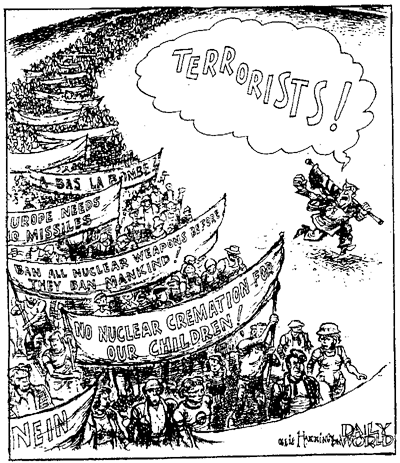
Peace supporters who march without a permit, anti-globalization activists who occupy buildings or try to shut down meetings like the WTO or FTAA, workers who refuse to abide by unjust labour laws, could all be termed "terrorist" under this definition.
The sponsors of this legislation had hoped that the September 11th attacks and the anthrax scare would allow them to force C-36 into law with little scrutiny or resistance. Instead, a wide range of lawyers, constitutional experts, political parties and social activists have condemned the bill. Even Liberal backbenchers and cabinet ministers, and the editorial department at the Globe and Mail and other newspapers, oppose some of the most anti-democratic aspects of C-36, such as the lack of any "sunset clause" to cancel the legislation after three or four years. Even if such a clause is added, this relatively minor concession would leave the real guts of the Bill intact.
While C-36 has received some media exposure, much more needs to be done to inform Canadians of its contents. The more people know about the Act, the sooner protests will grow.