On Feb. 16, 2001, 24 U.S. and U.K. aircraft bombed the outskirts of Baghdad. They attacked long-range surveillance sites which had locked on to the planes flying in the no-fly zone. President Bush said it was just another routine mission and a Pentagon spokesman said the U.S. was acting in self-defence.
The U.S. and British have been dropping bombs regularly in the no-fly zones that cover two-thirds of Iraq. Contrary to the propaganda version about protecting Iraq's ethnic people, some people say, the objective is to prevent a Kurdish secession in the north and the establishment of a Shiite religious state in the rest of the country, while maintaining the west's domination of the region and its access to cheap oil.
This airstrike was used as a testing ground for the new "joint standoff" weapon, that allows satellite controlled long distance targetting. The cluster bomb is 14 feet long and carries 145 anti-armour and anti-personnel bomblets the size of soda cans, which disperse over an area the size of a football field. Pentagon sources say that 26 of the 28 fired on Feb. 16 missed their aimpoints. The bomblets, like landmines, kill and wound innocent civilians for years to come. The airstrike was also a test run to see how much political support there was for a more extended conflict.
While this illegal and immoral bombing is condemned by many countries, including France and Germany, Canada's Liberal government shamefully makes us one of the only countries to support this outrageous attack.
Michel Chossudovsky, in an article in People's Voice (March 1-15, 2001) writes, "On Feb. 16... the value of high tech stocks plummeted on Wall Street in turbulent trading. The NASDAQ declined by more than five percent to a record low. But it could have been much worse. Did the bombing of Baghdad pull Wall Street out of danger? It did more than that. It put billions of dollars into the deep pockets of defence contractors and oil companies. In the days leading up to the Feb. 16 near-meltdown, stock market analysts had warned of a worst©case scenario. High tech stocks were heavily overvalued. But that day at 1 pm, a few hours before trading closed on the New York Stock Exchange, U.S. and British warplanes bombed Baghdad... brokers gasped with relief. For in a cruel irony, the bombing raids had saved the day."
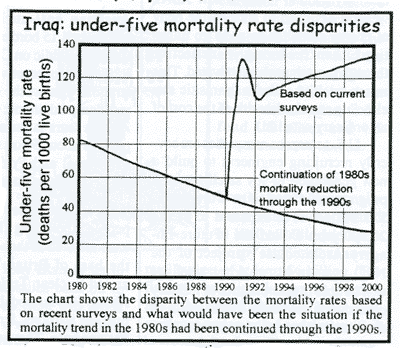
After more than a decade of sanctions against Iraq, no one on the Security Council wants them, except the U.S. and Britain. UN statistics published by the British Medical Journal show a sevenfold increase in cancer in southern Iraq between 1989 and 1994. There in a desert landscape the dust is everywhere and the dust carries death. Studies indicate that 49% of the population in that area will get cancer. Sanctions do not allow equipment to test contamination, or the cancer in bodies, and even painkillers are blocked by the sanctions committee. More than 1,000 life-saving items remain on hold in New York, even with Kofi Annan personally appealing for their release "without delay."
Each year, the Canadian military spends $34.9 million (1999 figure) to help enforce the naval blockade of Iraq. Last year, the HMCS Calgary prevented ships from delivering medicines, food and other supplies to Iraq. BC activists protested the Canadian "Ship of Shame" when it left Esquimalt harbour on June 20 on its way to joining the US-led task force which is enforcing the economic blockade of Iraq in the Persian Gulf.
(Abridged from an article in VANA Update - Press for Conversion! Issue #44, April 2001)